
Introduction
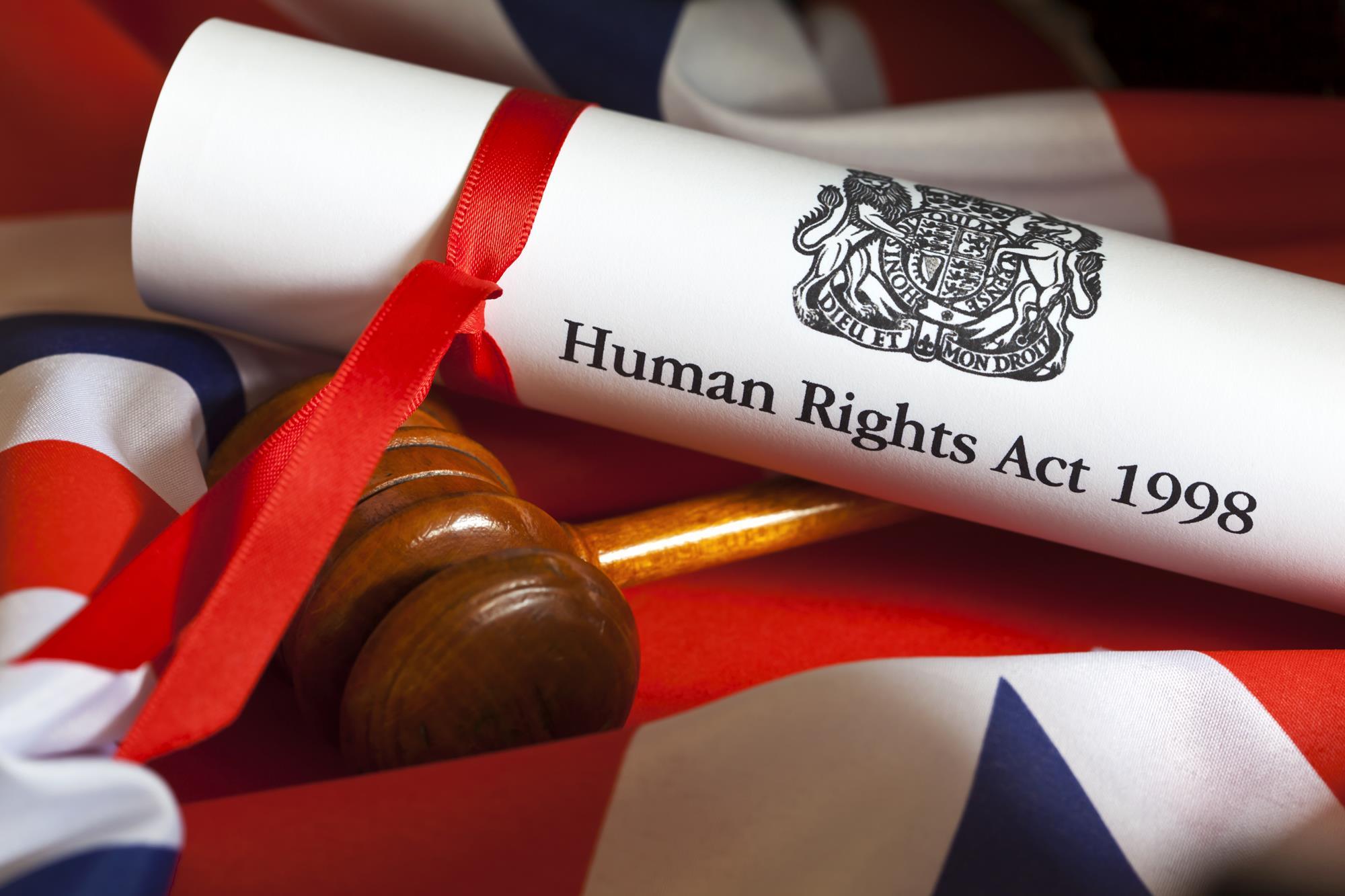
Freedom of expression as enshrined under Article 10 of the Human Rights Act 1998, includes the right to ‘hold opinions and to receive and impart information and ideas without interference by public authority and regardless of frontiers’.[1] Unlike freedom of speech, freedom of expression goes beyond the boundaries of words, extending to other forms of expression such as clothing, artistic work, religious practices, media and protesting. Freedom of expression is a qualified right meaning that it can be restricted where necessary in a democratic society and is therefore not absolute. It is strongly arguable that freedom of expression should be qualified to prevent the perpetuation of false information and hate speech. However, some may argue that this should be an absolute right as we live in a democracy. Fundamentally, this essay will argue that freedom of expression should have limitations for the overall benefit of society.
Why do we have freedom of expression and why is it important?
“If all mankind minus one were of one opinion, mankind would be no more justified in silencing that one person than he, if he had the power, would be justified in silencing mankind.”[2] (John Stuart Mill)
Mill in On Liberty (1859) points out the fundamental reason why freedom of expression is enshrined as a right for humanity (in most countries): it is a moral and practical necessity that protects truth, justice, the rule of law and knowledge. By allowing minority opinions to be heard, society ensures protection against the suppression of ideas, thoughts, beliefs and expressions.
John Rawls’ veil of ignorance also points to why freedom of expression is necessary. This theory removes knowledge of one’s social position, beliefs, identity, power and asks what principles we might derive to uphold a just society. Rationally, this would involve advocating for a system by which our ‘basic liberties’ are freely expressed, proportionate, and do not infringe upon others. In essence, even from basic human tendencies, we can conclude that having freedom of expression is not only beneficial but crucial to democracy, in reasonably protecting individuals.
What function does freedom of expression serve?
Education and accessibility are some of the key purposes of freedom of expression. This ensures society has open access to information and ideologies. While freedom of expression is crucial for enabling the open exchange of educational material, it also raises the question of who determines what qualifies as “educational” in the first place. Currently, this responsibility is among governments, courts, regulatory bodies, and private platforms each applying their own criteria. However, concentrating this power in any single institution may lead to excessive concentration of power: governments may be tempted to label critical or unpopular ideas as non-educational, while private companies may make decisions driven by commercial priorities rather than public value. A more measured approach, such as courts providing judicial oversight and independent bodies handling routine assessments, offers a way to protect educational expression without allowing subtle forms of censorship to take hold through a ‘slippery slope’ of increasing government control.
Why should freedom of expression be limited?
Firstly, freedom of expression must be limited to prevent the spread of hate speech – an extension to the aforementioned importance it has to protect society. Speech that incites violence, hatred or discrimination cannot just be deemed “offensive” – it can lead to genuine societal, physical and mental damage. For example, Jordan Parlour commented on Facebook in August 2024, calling for an attack on a hotel in Leeds where asylum seekers were housed. He was the first to be jailed for stirring up racial hatred online during the public disorder. Rosemary Ainslie, Acting Head of the CPS Special Crime and Counter Terrorism Division, said that “Parlour risked the safety of those staying and working at the hotel”.[3] This is one of the many instances where limitations of expression are necessary to ensure that certain groups of society are not disproportionately affected by hate speech. Reasonable regulation can prevent expression from becoming a tool of oppression while still safeguarding legitimate debate. This demonstrates the importance of ensuring that hate speech is not perpetuated without restrictions in place. If the internet became a lawless space, there would be strong potential for serious social disorder, which should not be taken lightly, despite claims that the United Kingdom is turning into an alleged ‘nanny state’. One must, however, consider the distinction between freedom of expression and freedom from consequences. The law may permit anindividual to have a qualified right to freedom of speech, however it does not and ought not to protect from the consequences of those in society criticising, disagreeing, and removing one’s views or beliefs from an online platform. Those arguing for absolute freedom of expression often disregard this – just because the law limits our ways of expressing ourself does not mean it grants freedom from consequences.
Secondly, limiting freedom of expression is necessary to maintain public order and social stability, particularly when misinformation can be easily spread. Studies by MIT Sloan Research show that false information spreads far more rapidly than true information; one landmark study found that falsehoods were 70% more likely to be retweeted on Twitter and reached 1,500 people six times faster than accurate news.[4] For example, during the August 2024 United Kingdom riots, Lucy Connolly posted a tweet on X demanding the government “set fire to all the f****** hotels full of the bastards”[5], after falsely believing the Southport attack was carried out by a Muslim asylum seeker. It makes rational sense, therefore, for the judicial system to remove misinformation from the internet to prevent misinformed judgements and opinions arising as a catalyst for further hate speech, racism and anti-social behaviour. Misinformation can often be viewed as the root of many damaging issues in society, as opposed to simply a symptom. Consequently, limitations to unreliable or untrustworthy material are essential in society. This also aligns with John Stuart Mill’s harm principle which holds that actions of individuals should be limited by the government only to prevent harm to other individuals, as outlined in On Liberty (1859)[6].
Finally, we must have limits to freedom of expression to protect vulnerable groups such as children from material that could seriously undermine their safety. Handyside v United Kingdom (1976) illustrates this. In Handyside, the UK authorities seized The Little Red Schoolbook, a publication that included content deemed inappropriate for school-aged children, at whom it was aimed. Although the book’s intent was not malicious, the UK believed its content could negatively influence minors’ psychological development and it was labelled as unacceptable. The European Court of Human Rights acknowledged that freedom of expression under Article 10 ECHR is crucial in a democratic societybut held that it is not ‘absolute’.[7]The court accepted that the UK’s interference was justified because the state has a legitimate interest in safeguarding public morals and protecting young people. This supports my overall argument that some limits on expression exist not to suppress ideas but to shield those who are most susceptible to harm. If no restrictions were permitted, explicit or damaging material could be freely distributed to minors, undermining both their welfare and society’s responsibility to protect them.
Why may some argue that there should not be limitations to freedom of expression?
The primary argument of proponents of absolute freedom of expression is that it is crucial for an open democracy. In the case of Jersild v Denmark (1994), a journalist was prosecuted for broadcasting an interview with members of a racist group, who made offensive and threatening statements. The European Court of Human Rights ruled that punishing the journalist violated Article 10, because the broadcast was intended to inform the public about social issues, not to promote racism.[8] The Court highlighted that journalists have a responsibility to report on matters of public concern, even if the content is controversial or offensive, and that limiting such reporting could prevent citizens from understanding the views and activities of groups that threaten public order. This case demonstrates that unrestricted expression allows journalists and citizens to challenge authority, expose societal problems and engage in debate. Without this protection, governments could control forums for public debate and weaken the transparency needed for democracy.
The second significant argument against limiting freedom of expression is the risk of a ‘slippery slope’ into broader censorship. In the Soviet Union, initial restrictions on speech were justified as necessary to protect socialist values and public order. Over time, however, these restrictions expanded to suppress almost all forms of political criticism, independent literature, and artistic expression. For example, writers such as Aleksandr Solzhenitsyn were forced into exile and imprisoned because their work exposed the Stalinist government’s abuse of power and challenged the state’s ideology. Samizdat, the underground circulation of banned writings, emerged as citizens sought alternative ways to share information that could not appear in official channels.[9] Journalists reporting on corruption or social issues risked arrest or professional ruin. These examples may demonstrate how granting authorities’ discretion to limit speech can concentrate control over public communication and enable the state to determine which ideas are permissible, thus undermining democratic principles. However, this is tenuous at best, given that current democracies such as the United Kingdom, are significantly different from the state of the USSR in the 1940s: the British common law ensures that the chance of state oppression is negligible.
Conclusion
Overall, despite some validity in the arguments proposed by the opposition to qualified freedom of expression, for a democratic and cohesive society, freedom of expression should be limited. Without limitations, our society would descend into anarchy and chaos with a rampant rise in hate speech and misinformation. A democracy in the UK can still be maintained with qualified freedom of expression and the realistic chance of a ‘slippery slope’ descending into a ‘nanny state’ is unreasonable.
Bibliography:
[1] Participation, Expert. “Human Rights Act 1998.” Legislation.Gov.Uk, Statute Law Database, 9 Nov.1998, http://www.legislation.gov.uk/ukpga/1998/42/schedule/1/part/I/chapter/9.
[2] “ CHAPTER II OF THE LIBERTY OF THOUGHT AND DISCUSSION.” On Liberty by John Stuart Mill , http://www.utilitarianism.com/ol/two.html. Accessed 19 Nov. 2025.
[3] “Home.” The Crown Prosecution Service, 9 Aug. 2024, http://www.cps.gov.uk/cps/news/man-jailed-posting-online-during-public-disorder.
[4] “Study: False News Spreads Faster than the Truth.” MIT Sloan, 8 Mar. 2018, mitsloan.mit.edu/ideas-made-to-matter/study-false-news-spreads-faster-truth.
[5] “Ex-Childminder Who Called for Arson on Asylum-Seeker Hotels Released from Jail.” The Guardian, Guardian News and Media, 21 Aug. 2025, http://www.theguardian.com/uk-news/2025/aug/21/lucy-connolly-ex-childminder-who-called-for-arson-asylum-seeker-hotels-released-from-jail.
[6] Mill, John Stuart (1859). On Liberty. Oxford, England: Oxford University. pp. 21–22. Retrieved 19 November 2025.
[7] Echr. “European Court of Human Rights.” HUDOC, hudoc.echr.coe.int/eng#{%22itemid%22:[%22001-57499%22]}. Accessed 19 Nov. 2025.
[8] Echr. “Jersild v Denmark (ECHR).” HUDOC, hudoc.echr.coe.int/eng#{%22itemid%22:[%22001-57891%22]}. Accessed 19 Nov. 2025.
[9] Ann Komaromi. (2012). Samizdat and Soviet Dissident Publics. Slavic Review, 71(1), 70–90. https://doi.org/10.5612/slavicreview.71.1.0070
Leave a Reply